
Swalwell Brewery opened in 1765 by John and Mathew Taylor, became County Durham’s biggest. It was located on the appropriately named Brewery Bank and occupied an acre of ground. Water was obtained from a depth of two hundred feet and forced to the top of a 50ft tower where it was held in a cistern holding 8,000 gallons. By 1852 only mild, sweet beers and porter were brewed. The plant and fittings were auctioned in 1901 and the brewery demolished.
Not far from Brewery Bank is the Sun Inn, known locally as “The Maids” after two spinsters who used to run the pub. This was the meeting place for our sixth CAMRA ramble (CAMRAmble) on a bright but cold October morning. Our host Davie Cook made us very welcome as he served his first customers of the day. I enjoyed a very light and refreshing Banks’s – Wainwright Gold (4.1% a.b.v.)
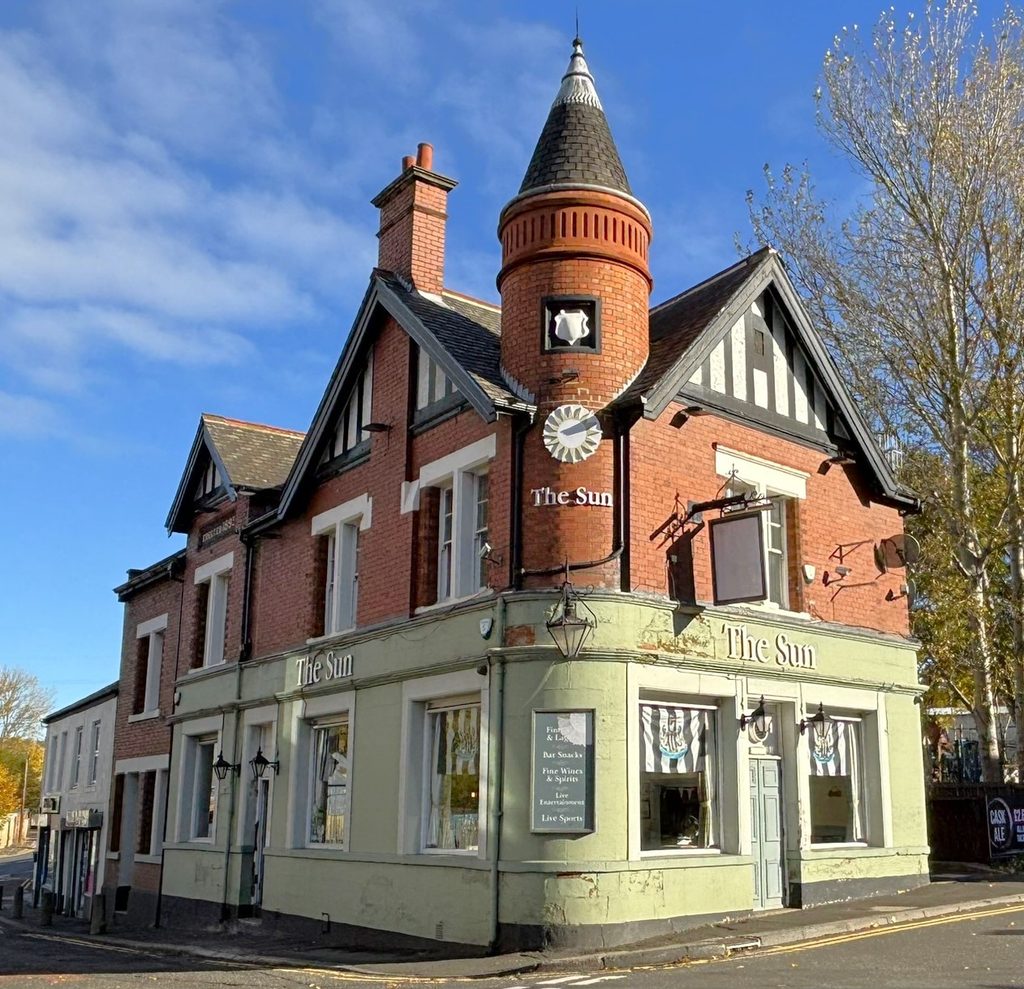
The Tyneside & Northumberland branch of CAMRA had organised the 2nd Gateshead Beer Month, a chance to celebrate some of the great pubs across Gateshead and the south Tyne area. The Sun Inn was one of the participating pubs and stickers were collected for the promotional leaflets.
At noon 14 walkers set off down Sands Road in the direction of the river Derwent passing the tall chimney stack of the former Northumberland Paper Mills which still stands on the car park of a certain groceries supermarket.
Very soon we were enjoying the views as we walked along the east bank of the river Derwent which flows for 35 miles from its origin near Blanchland. At its confluence with the river Tyne we crossed Derwenthaugh railway and footbridge. This iron girder structure replaced a wooden bridge in 1865/66 and now carries passenger trains between Newcastle and Carlisle.
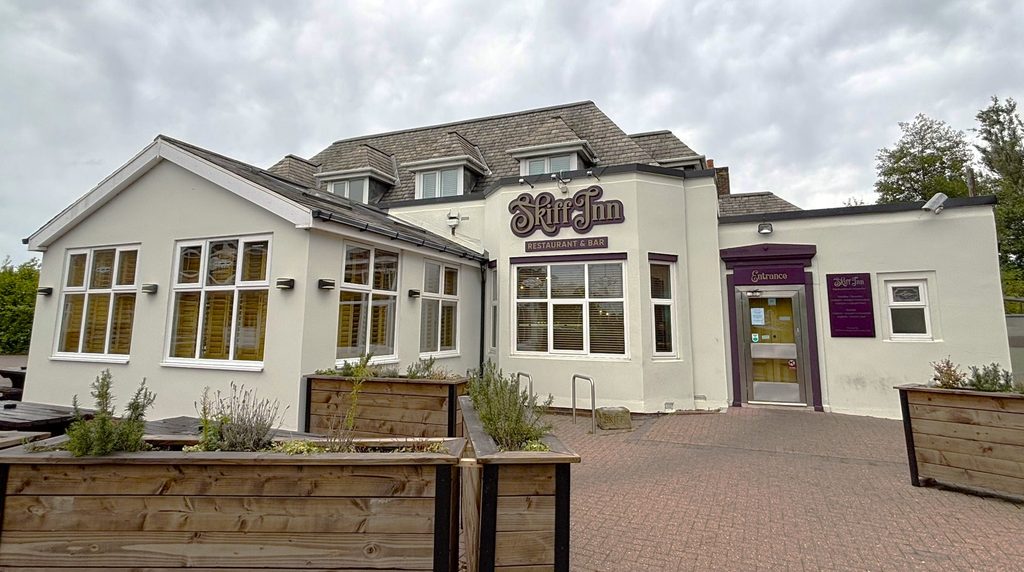
Within minutes we had arrived at the Skiff Inn at Derwenthaugh, a single roomed largely food-led establishment with a nautical flavour. Only one cask ale was available, Hadrian Border – Northern Pale (4.1%), but it was in good form. Henry (Harry) Clasper who found fame as a ‘World Champion’ oarsman was born in Whickham in 1812. He began running the Skiff Inn in the late 1830’s and whilst pub landlord he built himself two boats, known as skiffs. The Hawk was built in 1840 and The Young Hawk in 1841. He used the latter to win the 1842 Durham Regatta Single Sculls Race.
Refreshed and some of us nourished, we began a mile long walk along the south bank of the river Tyne with beautiful views across it in the bright sunshine. Derwenthaugh Marina area with its 19th century staithes, was an important coal handling and shipping point. It was used by the Consett Iron Company who opened a colliery at Chopwell, transporting coal along the Garesfield & Chopwell Railway to Derwenthaugh.
Before reaching Blaydon Haughs we passed under 3 enormous bridges that span the river; the suspended box girder Scotswood Bridge (constructed 1964-67), the wrought-iron Scotswood Railway Bridge dating from 1871 and the imposing concrete box Blaydon Bridge (constructed 1987-1990).
Turning south west onto a main road through an industrial area on Blaydon Haughs, we headed towards a railway level crossing and Blaydon town centre. Blaydon Haughs is also known as The Spike. The area was named for various reasons, with theories including a “spiked” land projection into the Tyne or a lodging house for Irish workers called “Spike Castle”.
Passing under the busy A695 we soon found Firebrick Brewery & Tap Room tucked away on Blaydon Business Centre. The owner Alistair Lawrence made us very welcome and introduced us to a fantastic selection of 4 cask and 4 craft ales. On cask were the breweries amber Blaydon Brick (3.8%), pale Pagan Queen (4.0%), Toon Broon (4.6%) and Blaydon Blonde (4.3%). Choosing the later, a beer I had never sampled before, I settled on a comfortable high stool in their warm and cosy taproom.
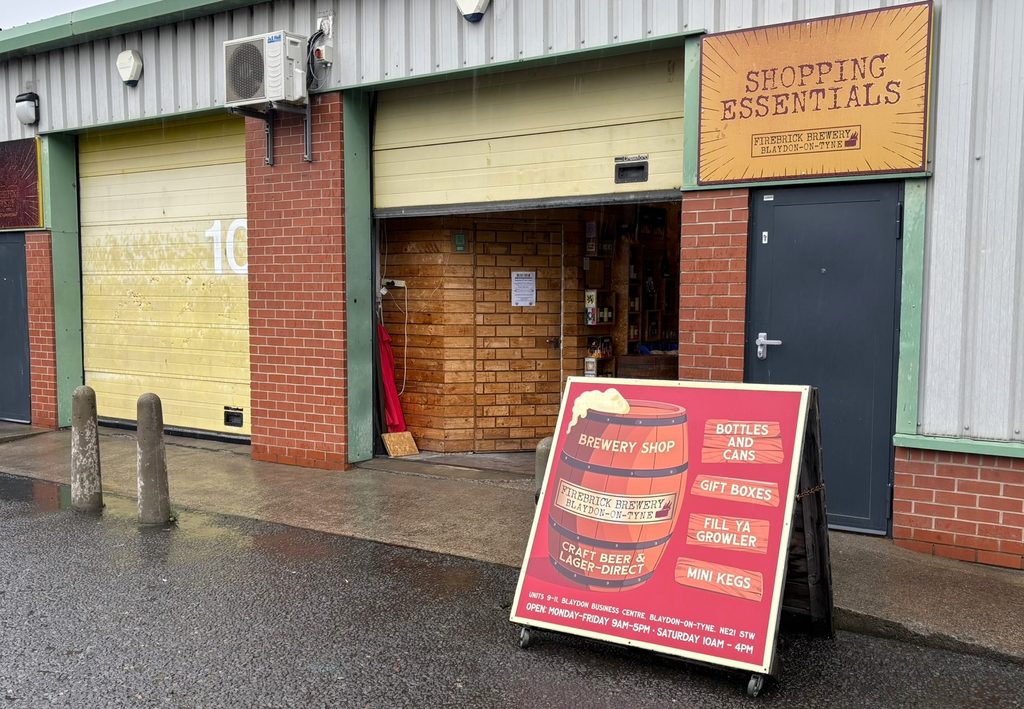
The brewery reflects the former local company Blaydon Brickworks, a famous industrial complex established around 1730, with the prominent Cowen’s Brickworks starting in 1819. They produced high-temperature firebricks that were exported globally and are still visible in local buildings. The brickworks closed in 1975, partly due to a shortage of clay and competition from cheaper brick producers.
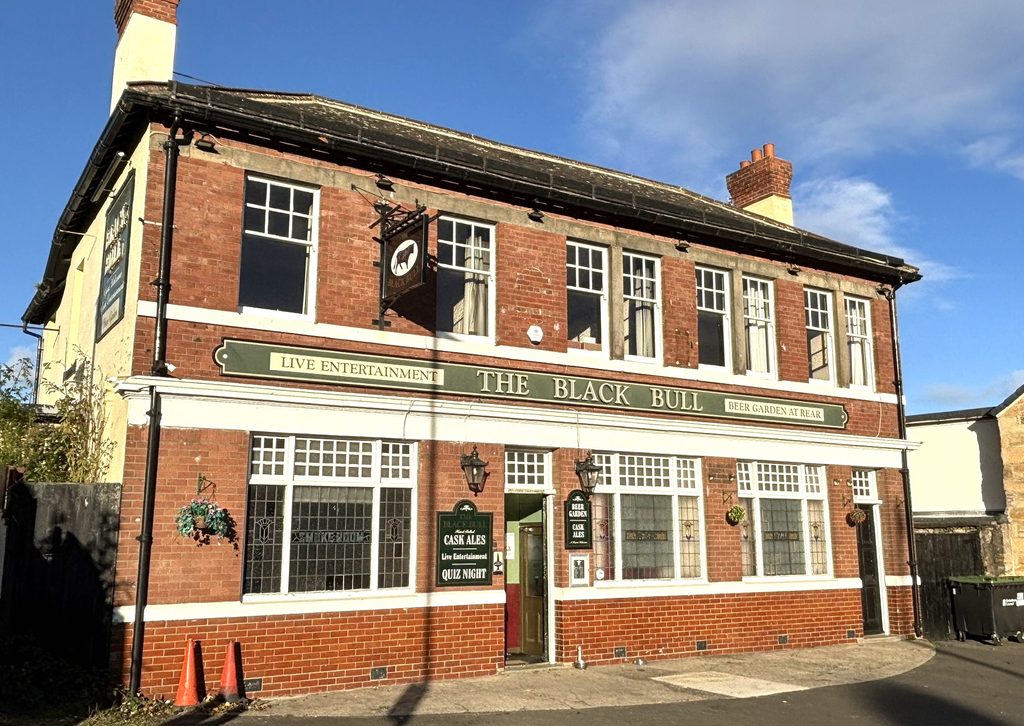
After our departure from the tap room we crossed a busy main road, walked through Blaydon shopping centre and crossed the Blaydon Highway via a footbridge to find the Black Bull. This is a two roomed local’s pub which proudly boasts “No pool table, no juke box and no bandit”. With the lounge closed at lunchtimes we gathered in the cosy bar where I enjoyed Firebrick – Pagan Queen (4.0%). The pub is very close to Blaydon railway station and is very convenient for thirsty passengers.
The next leg of our ramble was a delight. Within minutes were walking on a 1 ½ mile stretch along the south bank of the river Tyne where we passed a wonderful tribute to The Blaydon Races. A Geordie folk song of 1862, with the lyrics by George Ridley, “Blaydon Races” celebrates the horse races held at Blaydon. Prior to 1862 they were held just north of Blaydon on an island in the river Tyne called Dent’s Meadows. The revival lasted only until 1865, but the races began again in 1889 until the final meeting in 1916.
Before reaching Newburn Bridge, a steel lattice-girder structure built in 1893, we passed Ryton Haugh. Historically, the “haugh” (meaning low-lying land by a river) was used as a meadow for summer grazing.
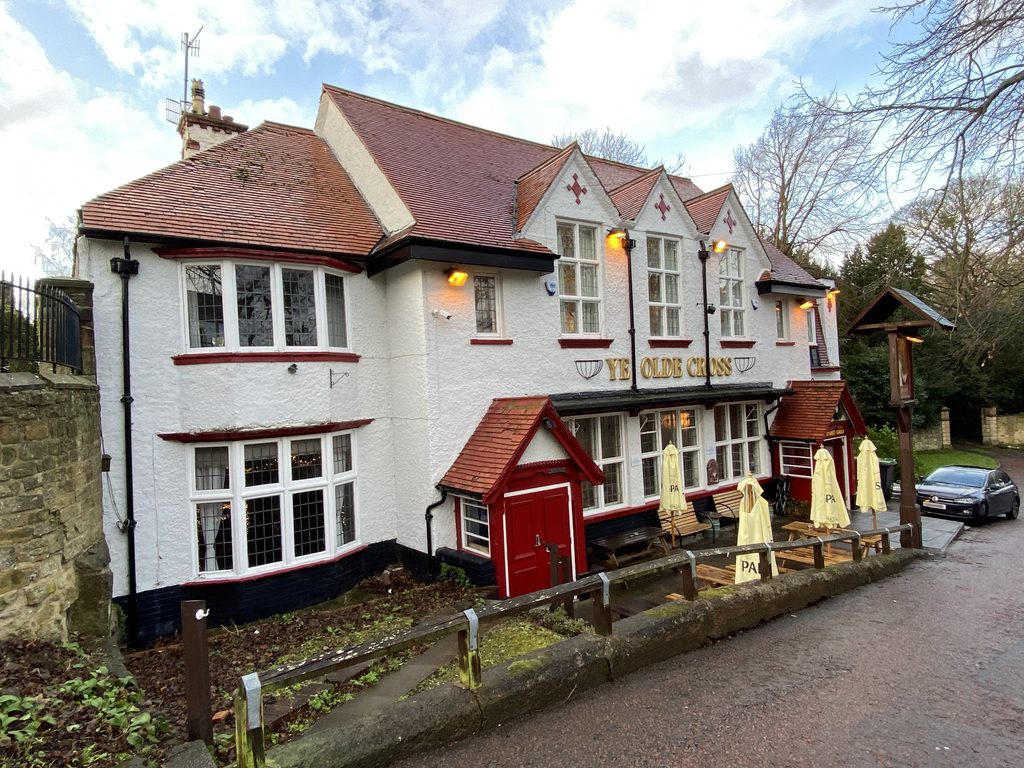
We then turned away from the river, crossed the railway line, headed up Peth Lane and into Old Ryton Village where we visited Ye Olde Cross. An attractive Edwardian half-timbered local, it was so busy that we sat in the beer garden. The original Cross Inn dates from the mid-19th century and was partly rebuilt in 1909. The pub is situated by the village green and the cross that names the pub. This is the first community-owned pub in the Tyne Valley. It closed in early 2018 and was officially re-launched in July 2019 following 18 months of dedicated work by villagers who registered the pub as an Asset of Community Value. This bought them time to fund-raise through share offerings and buy the pub. The pub serves four changing ales plus one regular ale and I enjoyed Anspach & Hobday – Hop Pickers’ Pale (4.2%) all the way from Croydon in South London
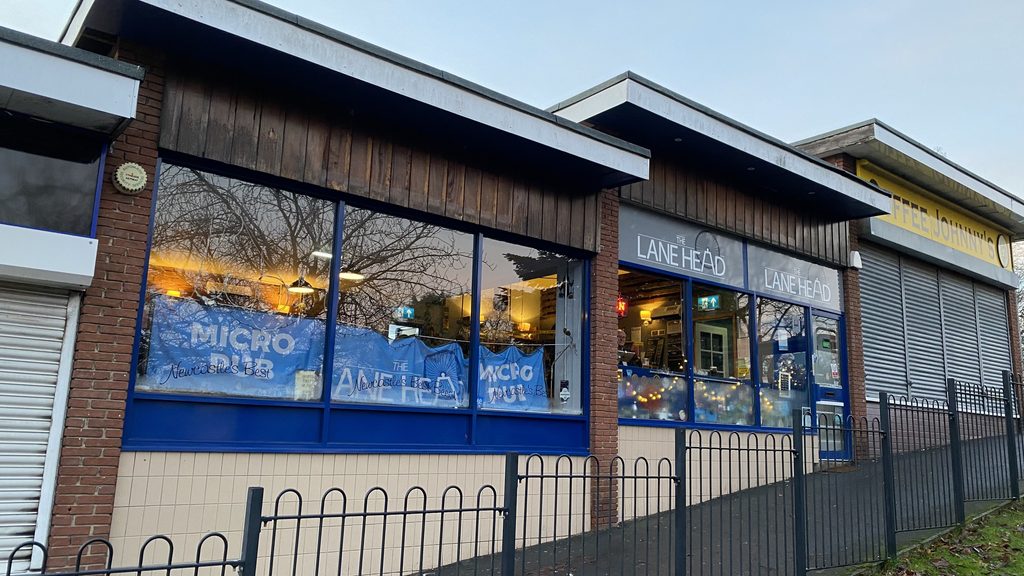
Now in darkness we took a short walk to Lane Head, a local shopping and social hub within the village of Ryton, to conclude our outing. There we called into a single roomed micropub, the Lane Head, with a large window steamed up on a now even colder October evening. Mission completed I treated my taste buds to, once again, Firebrick – Pagan Queen (4.0%) and Three Brothers – South Pacific Pale (4.2%).
Please look out for our next CAMRAmble early in the New Year when will again be enjoying good walking, cosy pubs and lovely ales.
Tara-a-bit!`
@MorpethWolf
- Distance
- 7.31 mi
- Max elevation
- 238 ft
- Waypoints
- 6