
Following the success of our branches’ first ever CAMRAmble in August, members recently embarked on a gentle linear walk in an area north of Whitley Bay. The route was easy to follow using the former waggonways, woodland pathways along Holywell Dene and clifftop paths near Hartley. Along the way we visited a selection of pubs serving real ale.
We met outside the Left Luggage Room (more about this fine pub later) at Monkseaton Metro Station. The station at the current site opened in July 1915 under the North Eastern Railway. Following closure for conversion in the late 1970s, much of the original station building has been retained.
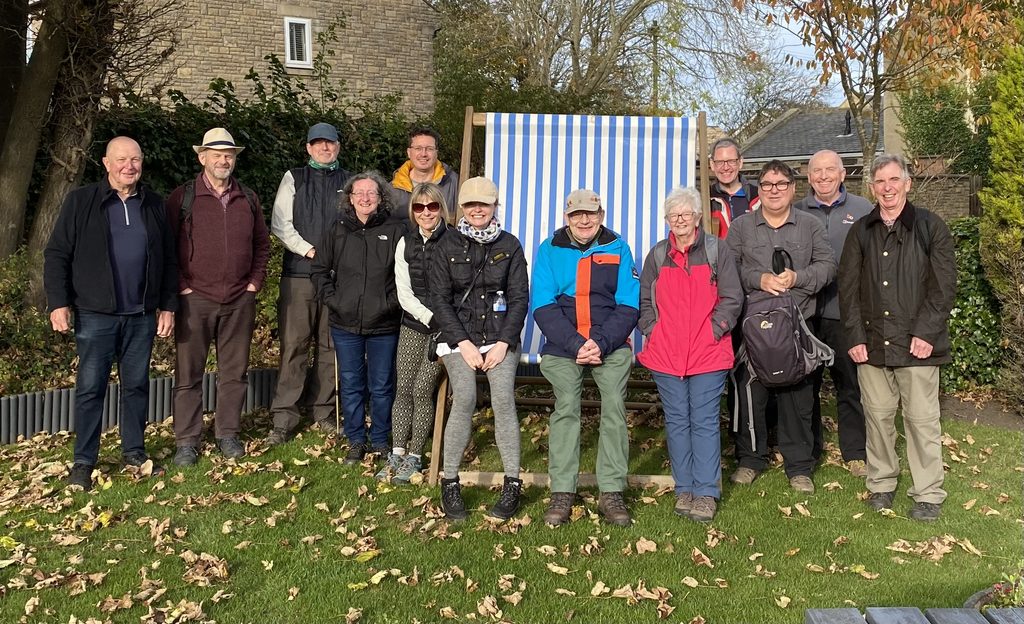
The weather was perfect for our walk, a bright sunny autumn morning and we set off to the northwest on a walk of just under 7 ½ miles. Before long we were walking along a stretch of North Tyneside’s “Waggonways”. These have great significance in the mining and industrial heritage of the borough, transporting mainly coal to points on the river Tyne for shipping to all corners of the world. This section was the “Avenue Branch” Railway Line, so called because it crossed The Avenue, a grand tree-lined approach to Seaton Delaval Hall. It was built in 1860 and operated until 1964.
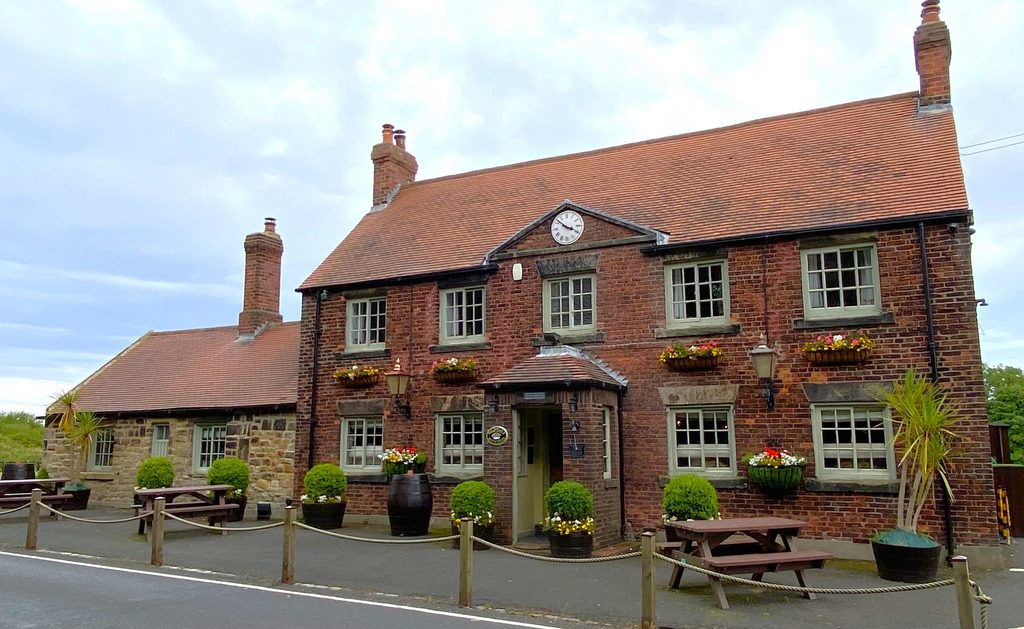
Turning southwest we followed a path which led us to The Beehive, an eighteenth century Grade II listed building and a pub from 1896. The pub is renowned for its excellent dining and also serves two changing real ales. I enjoyed locally brewed Hadrian Border, Mr Bojangles (4.1% a.b.v.) as we all sat in the beer garden in the warming sunshine.
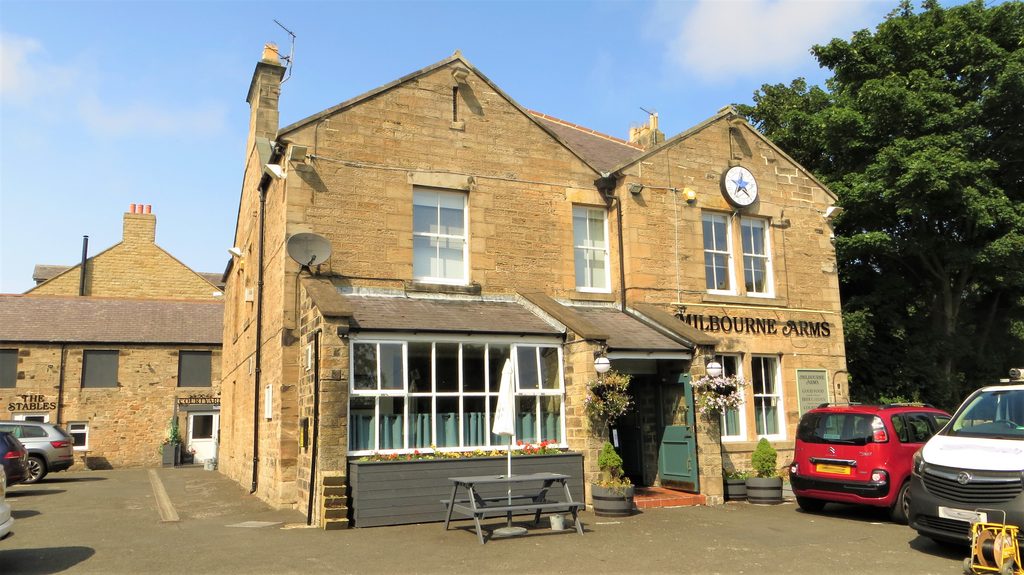
Retracing the path back to the former waggonway we headed northwest again, into the woodland along Seaton Burn following its winding paths to arrive at Holywell Bridge and the village of Holywell. The village takes its name from a well in the nearby dene. It was formerly known as Our Lady’s Well and therefore supposed to be holy, and hence this is where the village got its name. The Millborne Arms is a village pub in Holywell with modern décor but with a traditional atmosphere serving two changing beers and one regular beer. A variety of dishes to suit all tastes are available and I enjoyed Yorkshire Blonde (3.9%) from Ossett brewery with a delicious steak sandwich & chips.
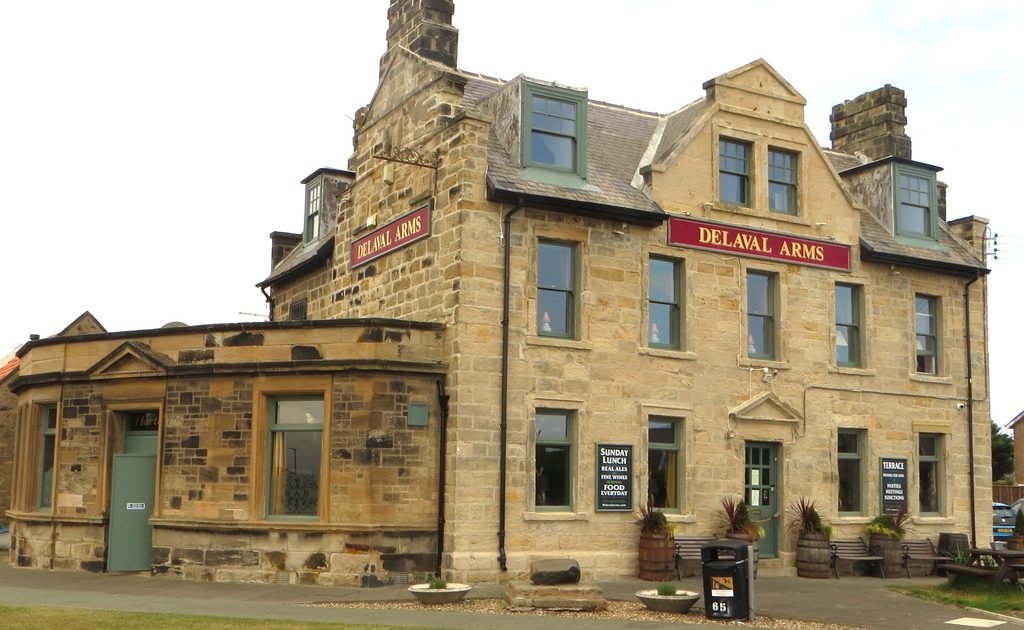
A half mile east of the village is an ancient woodland ravine named Holywell Dene. First recorded in 800AD when it was known as Merkel Dene, it stretches for over 5 miles from Seghill to the mouth of the Seaton Burn at Seaton Sluice. It is a delight to walk, ablaze with autumn colours, as we continued along the dene towards the village of Old Hartley in Northumberland. Here we visited the Delaval Arms which is the first (or last) pub in Northumberland along the King Charles III England Coast Path. This multi-roomed Grade II Listed Edwardian pub (originating from 1748) is included on CAMRA’s North East Pub Interiors of Special Historic Interest. The many fine features include a mosaic floor at entrance, an etched glass panel on the inner door and an original fireplace in the ‘Select Room’ which has a hatch to the back of bar. The main bar has the original curving counter, a new bar back and original half panelling where two changing beers and one regular beer are served. I decided to sit in the extensive outdoor seated area at the rear of the pub as I enjoyed another beer from Hadrian Border, their Farne Island Pale Ale (4.0%)
We followed the coastal path north along a cliff top and enjoyed the stunning views out over the North Sea with St Mary’s Lighthouse in the distance. At Collywell Bay our next pub to call at came into sight as we approached Seaton Sluice. The King’s Arms is a traditional pub with wooden beams, two real fires, an excellent reputation for food and serves two changing beers with two regular beers. I chose Theakston, Paradise Ale (4.2%). The pub dates back to the late 1700’s when it was the Overseers house and it sits majestically next to the man-made harbour constructed by the famous Delaval family. The village was formerly known as Hartley Haven, and was used for the export of coal and salt. However the harbour was prone to silting, which limited access by ships. This problem was tackled by Sir Ralph Delaval (1622–1691), who had a pier constructed and sluice gates that trapped the seawater at each high tide. At low tide the gates were opened, flushing the sand out of the harbour. Henceforth the village became known as Seaton Sluice.
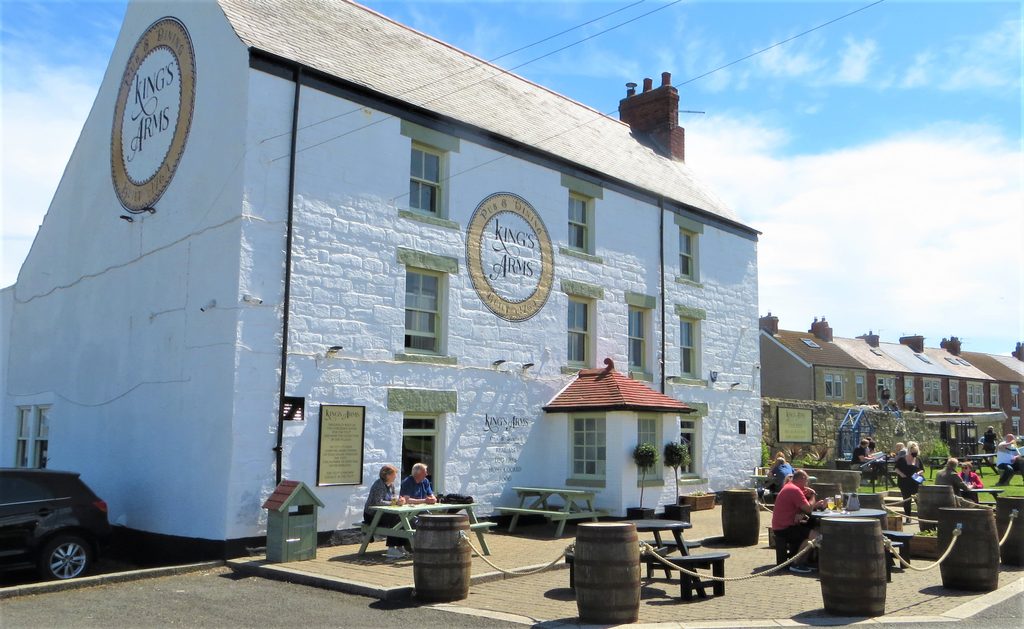
A short walking distance from the King’s Arms is a large roadside pub named after the village of Melton Constable in Norfolk, the Southern seat of the Astley family who inherited the Delaval estates in 1814. Delaval Hall is under a mile away. Beach and historic sights are nearby too plus the conservatory has fine views of Seaton Burn. This Pub serves two changing beers and three regular beers. We settled in their conservatory overlooking Seaton Burn as I tasted London-brewed Allsopp’s, India Pale Ale (5.0%)
Our seven-plus mile ramble concluded at the Melton Constable but our day out was not yet complete.
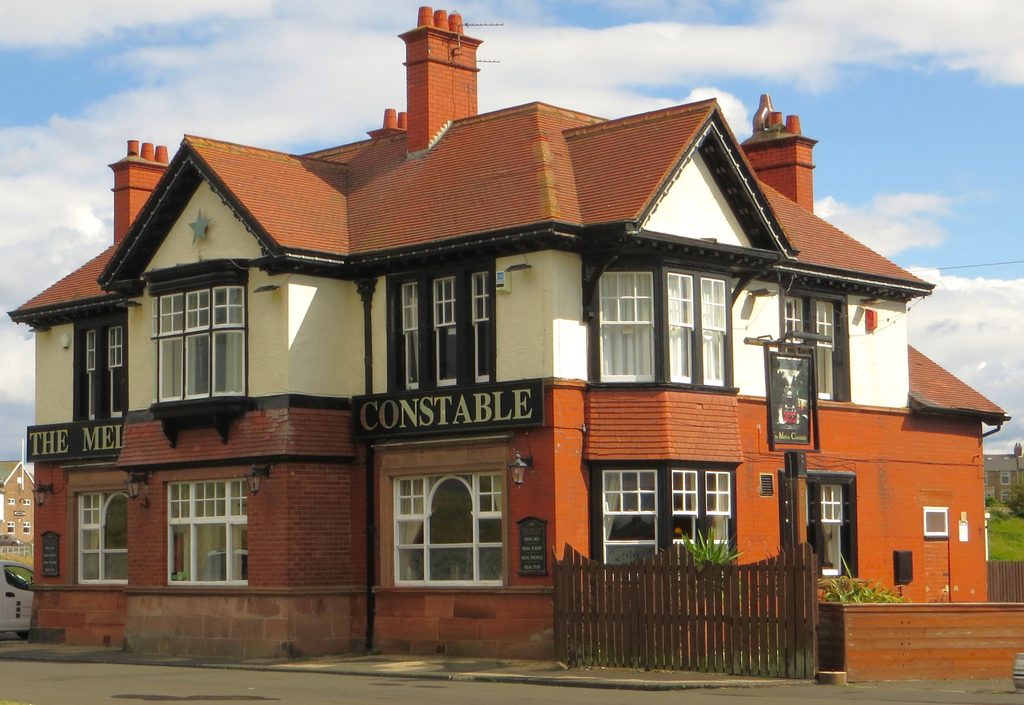
Catching the 308 bus at the stop across from the pub we alighted at Hillheads Road in Monkseaton for a 10 minute walk to Monkseaton Metro Station and the Left Luggage Room. Situated in the disused former left luggage room (hence the name) of the station the pub it is accessed directly from the southbound platform side. A single open plan room has the bar at one end and free-standing seating. The area between the building and the platform fence provides covered outdoor seating until mid-evening. It is a haven for thirsty commuters with six real ales on hand pull and four on keg.
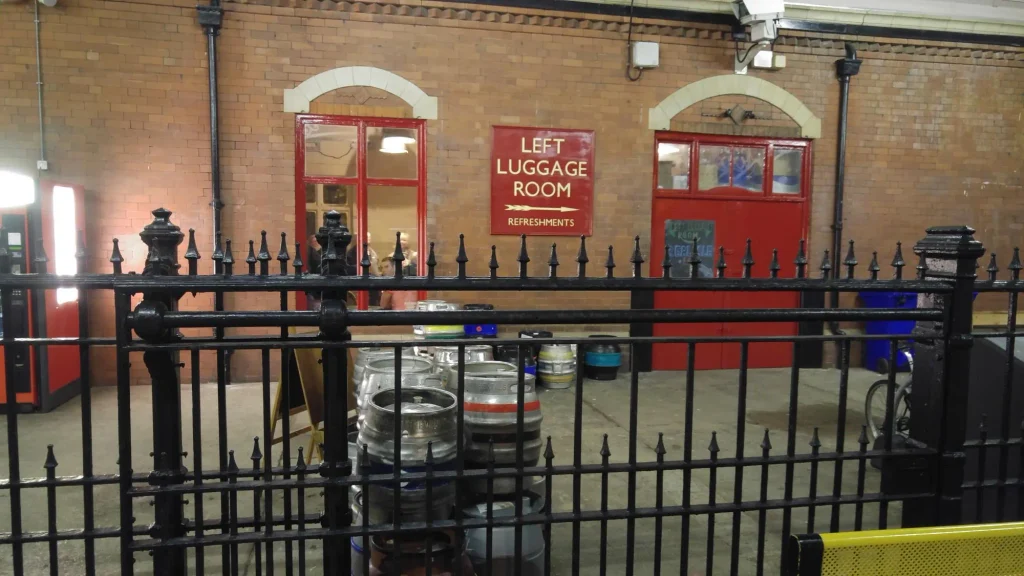
I enjoyed Flying Gang, Chain Shot IPA (4.7%) brewed locally at Ponteland and reflected on a successful day. I am certain that those attending had an enjoyable day out walking and sampling the real ales in the varied selection of pubs that we visited. Please keep a look out on the branch diary and I hope that you can join us on our next branch CAMRamble.
Tara-a-bit !
@MorpethWolf
- Distance
- 7.56 mi
- Max elevation
- 119 ft
- Waypoints
- 6